

Introduction (Humanized + EEAT Hook)
It was just another normal morning at a small office in the city. Employees were busy replying to emails, attending calls, and rushing to meet deadlines. Suddenly, a worker slipped near the pantry because of a small water spill that no one noticed. Within seconds, a routine day turned into an accident that caused injury and halted work for hours.
This kind of situation is more common than most people think. Many workplace incidents happen not because of major failures, but due to a lack of awareness and ignoring basic workplace safety rules. Whether it is an office, factory, or construction site, following simple occupational safety tips can prevent serious harm.
Workplace safety is not just about rules written on paper. It is about building a mindset where every employee actively contributes to a safer environment. In modern organizations, safety culture is becoming just as important as productivity and performance because protecting human life always comes first.
Why Workplace Safety Matters in Every Industry
Workplace safety is essential in every industry, whether it is a corporate office, manufacturing unit, construction site, or even remote work setup. A safe environment ensures that employees can perform their tasks without fear of injury or health risks.
Strong workplace health and safety practices directly improve productivity because employees work better when they feel protected. On the other hand, accidents can lead to downtime, financial losses, and long-term damage to a company’s reputation.
Safety is also closely linked with legal compliance. Organizations are required to follow proper regulations to protect employees and reduce risks. This makes accident prevention at work not just a moral responsibility but also a legal one.
Understanding Basic Workplace Hazards
Every workplace has potential risks that can lead to accidents if ignored. Understanding these hazards is the first step toward effective workplace hazards prevention.
Common workplace hazards include:
- Physical hazards such as slips, trips, falls, and machinery-related injuries
- Chemical hazards from exposure to harmful substances
- Electrical risks caused by faulty wiring or unsafe equipment
- Ergonomic issues like poor desk setup, incorrect posture, and repetitive strain
- Psychological stress factors including workload pressure and workplace anxiety
To reduce these risks, organizations must follow proper safety procedures at work and ensure employees are trained to identify danger before it leads to accidents.
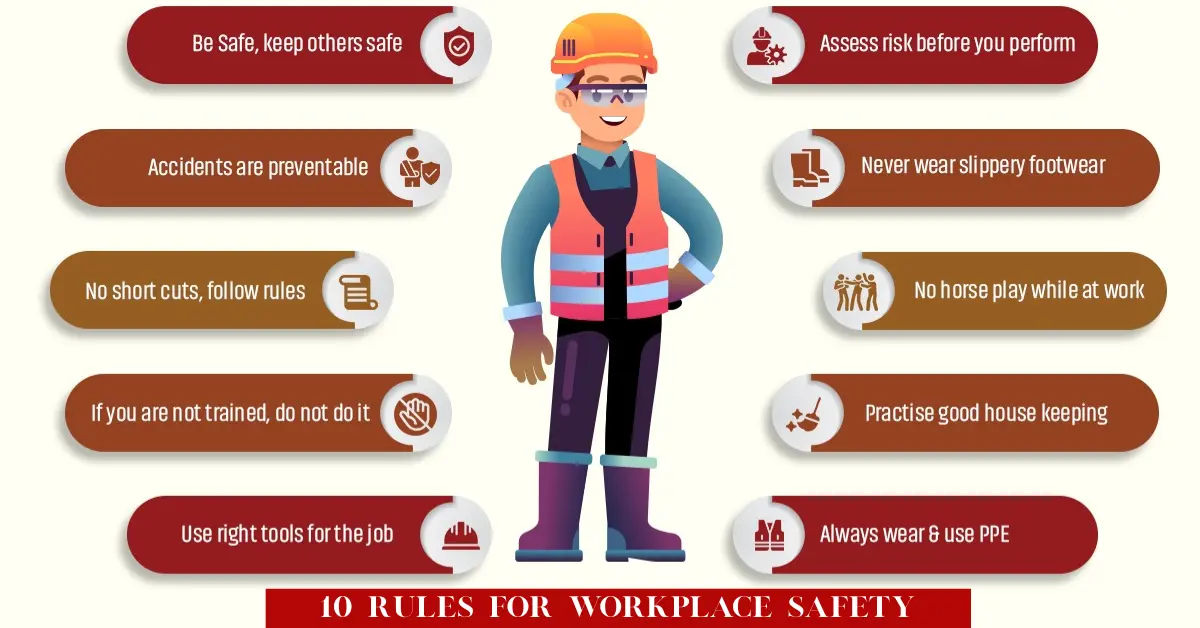
10 Rules for Workplace Safety (Main Section)
Always Follow Safety Guidelines and Policies
Every organization creates safety rules for a reason. Following these guidelines and standard operating procedures helps reduce risks and ensures a structured working environment.
Keep Your Work Area Clean and Organized
A clutter-free workspace reduces the chances of slips, trips, and other avoidable accidents. Cleanliness is a basic but powerful part of workplace safety rules.
Wear Proper Safety Equipment When Required
Personal protective equipment such as helmets, gloves, or goggles should always be used when needed. It is a simple step that prevents serious injuries.
Report Unsafe Conditions Immediately
If you notice anything unsafe, report it without delay. Quick reporting helps prevent small issues from turning into major accidents.
Avoid Distractions While Working
Distractions can be dangerous, especially when operating machines or handling sensitive tasks. Focus is an essential part of safety.
Use Equipment Only After Proper Training
Never use tools or machinery without proper training. Understanding equipment reduces mistakes and increases efficiency.
Maintain Correct Posture and Ergonomics
For office workers especially, poor posture can lead to long-term health issues. Proper seating and ergonomic setups are important occupational safety tips.
Follow Emergency Procedures and Exit Plans
Every employee should know emergency exits, fire drills, and evacuation plans. Being prepared can save lives during unexpected situations.
Never Ignore Small Injuries or Risks
Even minor cuts or hazards should not be ignored. Early attention prevents complications and supports better workplace safety rules.
Promote a Safety First Mindset at Work
Safety is a shared responsibility. When employees support each other and prioritize safety, the entire workplace becomes more secure.
Workplace Safety Checklist for Employees
A simple checklist helps employees stay alert and follow safe practices daily.
Before starting work:
- Check your workspace for hazards
- Ensure equipment is working properly
- Wear required safety gear
During work:
- Stay focused and avoid distractions
- Follow safety instructions
- Report risks immediately
After finishing work:
- Switch off equipment properly
- Clean your workspace
- Store tools safely
This checklist improves awareness and reinforces workplace health and safety habits.
Role of Employers in Ensuring Workplace Safety
Employers play a major role in maintaining a safe working environment. Strong leadership ensures better implementation of safety procedures at work.
Key responsibilities include:
- Providing regular safety training programs
- Conducting safety audits and inspections
- Supplying proper PPE to employees
- Creating easy reporting systems for hazards
When employers take safety seriously, employees naturally follow the same mindset, reducing workplace risks significantly.
Common Mistakes That Lead to Workplace Accidents
Many accidents happen due to simple but avoidable mistakes such as:
- Ignoring established safety rules
- Poor communication among team members
- Lack of proper training
- Overconfidence while handling tasks
Avoiding these mistakes is essential for strong accident prevention at work.
How to Build a Strong Safety Culture at Work
A strong safety culture is built over time with consistent effort. Leadership plays a key role in setting expectations and encouraging safe behavior.
Important steps include:
- Leadership commitment to safety standards
- Active participation of employees
- Continuous safety training and awareness programs
- Recognizing and rewarding safe practices
When safety becomes part of the workplace culture, accidents naturally decrease.
Conclusion (Humanized + Action Driven)
Workplace safety is not something to be taken lightly. It is a daily responsibility that protects lives, improves productivity, and builds trust within an organization. By following simple workplace safety rules and applying practical occupational safety tips, every employee can contribute to a safer environment.
In the end, safety is not a rule, it is a habit that protects lives.
